Is Mamba Board the Next Big Thing in Boat Building?
Recently, Mamba Board has started popping up in boatbuilding conversations as a possible alternative to marine plywood, Coosa, and other composite panels. And on paper, it checks a lot of boxes that matter to skiff builders, repair shops, and anyone who has ever ripped out a rotten transom while quietly questioning every life decision that led them there.
Boatbuilding materials have a funny way of sounding either incredibly boring or like they were named by a guy who owns too many tactical flashlights.
Marine plywood? Boring. Coosa Board? Practical. Honeycomb core? Science-y. Mamba Board? Now we’re awake.
Recently, Mamba Board has started popping up in boatbuilding conversations as a possible alternative to marine plywood, Coosa, and other composite panels. And on paper, it checks a lot of boxes that matter to skiff builders, repair shops, and anyone who has ever ripped out a rotten transom while quietly questioning every life decision that led them there.
So, is Mamba Board the next best thing for boatbuilding?
Maybe.
But let’s not put it in the Hall of Fame before it has played a full season.
First, What Is Mamba Board?
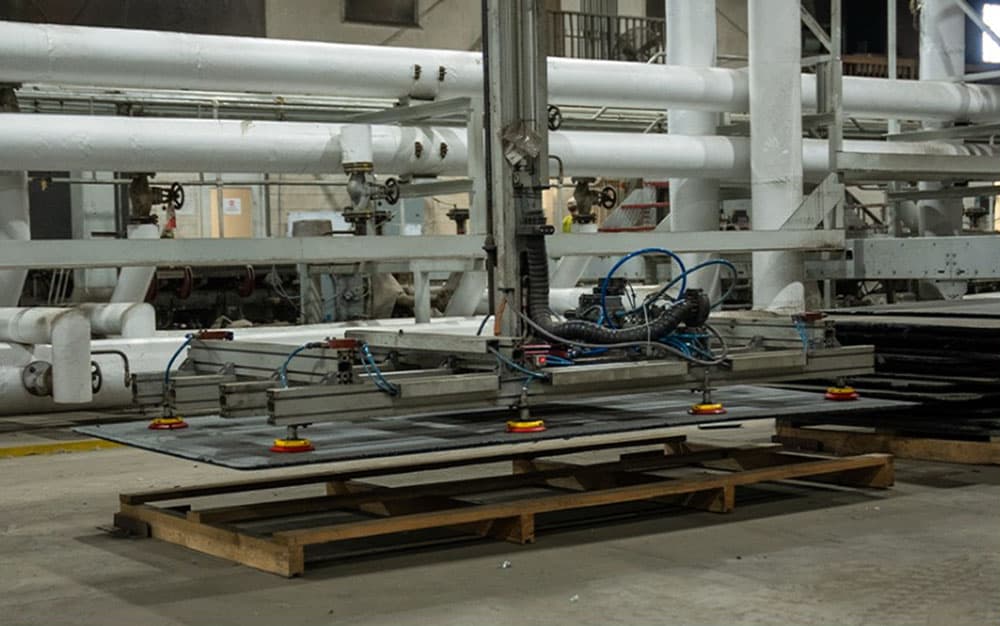
Mamba Board is a composite panel made by RePolyTex using recycled plastic material. The company says it is made in the USA, uses a minimum of 84% recycled plastic, and is designed to resist water, weather, pests, and the general nonsense that destroys wood over time.
For boatbuilding, the more interesting version is Mamba Suede.
No, not suede like a fancy jacket you should never wear near a boat ramp. Mamba Suede is the marine-focused version of the product. It has a plastic composite core with a fiberglass-reinforced surface designed to bond with polyester resin systems. According to Mamba, it is intended for uses like bulkheads, stringers, decking, flooring substrates, hand layup, resin-infused builds, and even transoms.
That matters because most plastic boards have one major problem in fiberglass boatbuilding:
They do not like to bond.
They are basically the emotionally unavailable boyfriend of materials.
Mamba Suede is trying to solve that by giving builders a surface that is more resin-friendly.
Why Boat Builders Are Paying Attention
The traditional material stack in small boatbuilding usually involves some combination of:
Marine plywood Coosa Board PVC foam Honeycomb core Fiberglass laminates Aluminum reinforcements Hope Regret More resin than originally budgeted
Marine plywood is affordable and strong, but if water gets in, it can rot. And water always finds a way. It is the raccoon of the boating world.
Coosa is proven, rot-resistant, and widely used in decks, bulkheads, floors, transoms, and structural parts. Coosa’s own technical data lists Bluewater 26 at about 52 pounds for a 4x8 sheet of 3/4-inch material, compared to roughly 70 pounds for marine-grade plywood. It is also dimensionally stable and rot-resistant.
So for Mamba Board to matter, it has to do a few things well:
It has to resist water. It has to hold fasteners. It has to bond well with fiberglass. It has to be strong enough for real boat work. And ideally, it needs to cost less than a boutique skiff option list.
That last part is important.
Because if a material costs as much as Coosa but weighs more and has less history behind it, then congratulations, we have invented anxiety.
The Big Selling Point: No Rot
The most obvious advantage of Mamba Board is that it is not wood.
That alone gets attention.
RePolyTex says Mamba Board is impervious to water, resistant to chemicals, and dimensionally and thermally stable. For boatbuilders, that means it could potentially be used in places where plywood traditionally gets glassed over and prayed for.
Decks. Hatches. Bulkheads. Seat boxes. Console parts. Cabinetry. Maybe structural components, depending on the build, engineering, and actual testing.
In a flats skiff, where weight, stiffness, water resistance, and longevity all matter, a rot-proof board is always going to get attention.
Especially from anyone who has ever said, “It’s just a soft spot,” right before discovering a full archaeological dig site under the deck.
#The Real Question: Is It a Coosa Killer?#
Not yet.
That does not mean it is bad. It means Coosa has a long track record in marine use, while Mamba Suede is still building its reputation.
Coosa Bluewater 26 is a known quantity. It is a fiberglass-reinforced polyurethane foam panel with a 26 lb/ft³ density, commonly used where builders want a lighter, rot-proof plywood replacement. Retailers commonly position it for transoms, bulkheads, flooring, and structural applications.
Mamba Suede may end up being a very practical alternative, especially if pricing is closer to marine plywood than premium composite panels. But builders should still ask for the boring data.
And by boring data, we mean the stuff that actually matters:
Density Weight per sheet Flexural strength Compressive strength Shear strength Screw pull-out strength Resin adhesion testing Water absorption Heat performance Fatigue testing Long-term field results
Yes, that list is less exciting than a new skiff build reveal. But it is also what keeps your deck from feeling like a trampoline after three summers.
Where Mamba Board Makes the Most Sense Right Now
For skiff builders and repair shops, Mamba Suede looks most interesting in non-critical to moderately structural areas first.
That includes:
Deck panels A rot-proof deck substrate that bonds well and holds screws could be very useful.
Hatch lids Especially if weight and stiffness are acceptable.
Bulkheads Good test area, depending on load and layout.
Console panels A great place to test workability, finish quality, fastener retention, and rigidity.
Seat boxes and storage compartments Rot resistance matters here, and the loads are usually more manageable.
Flooring substrates Potentially very interesting if bonding and stiffness check out.
Basically, Mamba Suede may be a strong candidate anywhere builders currently say, “We could use plywood here, but I’d really rather not create a future problem for someone named Brent in 2037.”
Where I’d Be More Careful
I would be cautious before using Mamba Suede as a drop-in replacement for proven structural materials in high-load areas.
That includes:
Transoms Yes, Mamba lists transoms as an application, but transoms are not where you freestyle unless you know exactly what you’re doing. Outboards are heavy. Torque is real. Physics does not care about your Instagram caption.
Primary stringers Stringers are the skeleton. You do not want experimental bones.
Engine mounting areas See above, but with more expensive consequences.
High-load structural grids Especially on performance skiffs, tunnel hulls, or anything expected to run hard.
Commercial builds without testing If you are selling boats to customers, your material choices need to be defensible, repeatable, and documented.
Could Mamba Suede work in these areas? Maybe. The manufacturer says it is engineered for structural marine assemblies, including stringers, decks, and transoms. But for a builder, “maybe” is not a structural engineering plan.
It is a group text.
The Skiff-Specific Angle
For flats skiffs, microskiffs, and technical poling skiffs, material choice is extra important because every pound matters.
A heavy material can be strong, durable, and affordable, but if it adds too much weight, your shallow-water skiff starts drifting into “technically still floats” territory.
That is why Coosa, foam cores, honeycomb panels, and carefully engineered laminates are so popular in the skiff world. Builders are constantly trying to balance:
Weight Strength Stiffness Cost Labor time Water resistance Hardware mounting Finish quality
Mamba Suede may be attractive because it appears to offer durability, screw retention, resin bonding, and water resistance in one panel. But until more builders publish real-world results, the big unknowns are weight, stiffness, bonding consistency, and long-term performance in a wet, hot, vibrating boat environment.
And if there is one thing boats do well, it is turn “seems fine” into “please get the trailer.”
Could This Be Great for DIY Boat Repair?
Actually, yes.
This may be where Mamba Board gets traction first.
A lot of DIY repair work involves replacing rotten plywood in places like decks, hatches, boxes, small bulkheads, and interior panels. For those jobs, a water-resistant board that cuts, bonds, and fastens well could be very appealing.
Especially if it is less expensive than Coosa.
Coosa is excellent, but it is not cheap. If Mamba Board can deliver a practical middle ground between marine plywood and premium composite board, that could be a big deal for repair shops and DIY owners.
The marine industry loves proven materials.
But it also loves saving money.
We contain multitudes.
So, Is Mamba Board the Next Best Thing?
Here is the honest answer:
Mamba Suede looks promising. Very promising, actually.
But it is not time to crown it the new king of boatbuilding materials just yet.
It could become a strong alternative to marine plywood in certain applications. It could compete with Coosa in some areas if the weight, price, bonding, and strength data line up. And it could be especially useful for decks, hatches, bulkheads, cabinetry, and repair work where rot resistance and screw retention matter.
But for critical structural areas, proven materials still have the advantage.
Mamba Suede needs more builder feedback, more published testing, and more time in actual boats.
Because boatbuilding is not just about what a material does on a spec sheet.
It is about what it does after three years of heat, chop, trailer vibration, saltwater, bilge water, questionable wiring, and a guy named Travis stepping on the same hatch lid 4,000 times in Crocs.
Final Take
Mamba Board is not magic.
But it might be useful.
And in boatbuilding, “useful” is a pretty high compliment.
For skiff builders, I would not start by replacing every piece of Coosa or marine plywood overnight. I would start small. Test it in hatches, decks, consoles, bulkheads, and non-critical structures. Track the weight, cost, bonding, finish quality, screw retention, and how it handles abuse.
If it performs well, expand from there.
For now, Mamba Suede deserves a serious look — not because it has a cool name, although it absolutely does — but because the marine industry needs more materials that do not rot, do not drink water, and do not require selling a kidney every time you need a 4x8 sheet.
Verdict: Promising, practical, and worth testing. Just maybe do not bet the transom on it yet.