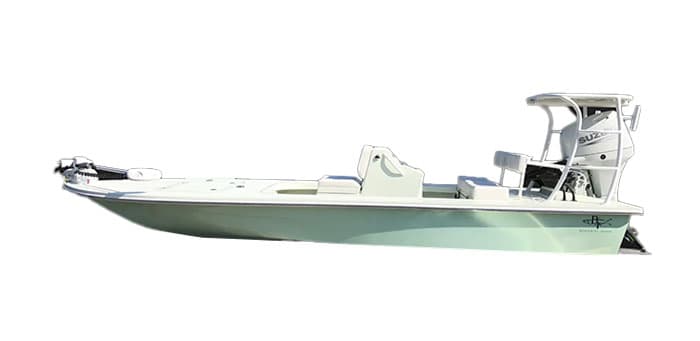
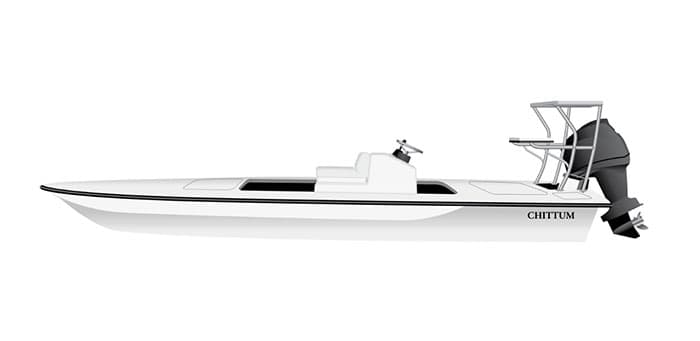
Technical Skiff vs. Microskiff: Which One Do You Actually Need?
They look similar on the ramp, but they fish very differently. Here's how to tell which category fits your water — before you spend six figures finding out.
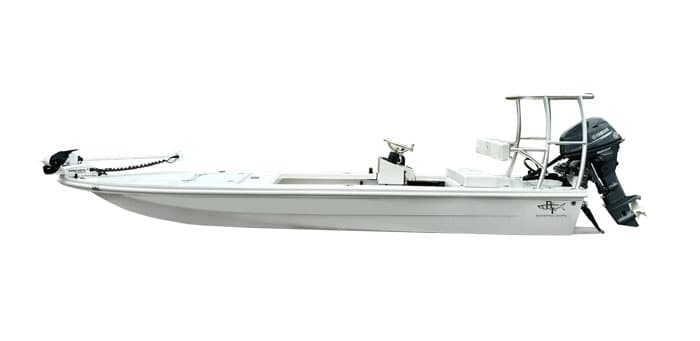
"Technical skiff" and "microskiff" are two of the most misused terms in the shallow-water world. Both are built to hunt in thin water. Both spend most of their life with one person on a platform. But the trade-offs they make are genuinely different, and the buyer who conflates them usually ends up with a boat that is a compromise at both jobs.
The short version
- Technical skiffs prioritise run-and-gun range, rougher-water competence, and a bigger-water-capable ride.
- Microskiffs prioritise absolute draft, stealth, and one-person ease of use on protected water.
- There is real overlap in the middle, but the extremes do not interchange well.
Running water that isn't glass
The most immediate difference shows up at 25+ mph in a light chop. A full-size technical skiff like the Hell's Bay Professional 17.8 or East Cape 18 EVO will cross the same stretch of bay a microskiff will cross only once, for the ride home. If your fishing day starts with a 9-mile run to a flat, you are buying a technical skiff whether you know it or not.
Stealth in truly skinny water
The flip side shows up once you are actually poling. A microskiff like the Hell's Bay Whipray disappears in water a technical skiff can only poke the bow into, and the hull-slap profile is quieter at rest. For anglers whose home water is measured in single-digit inches, the jump from a good technical skiff to a dedicated microskiff is more consequential than most people expect.
Stability on the platform
Technical skiffs feel broadly planted. Microskiffs take a moment to learn — the best ones become second nature, but they do not start that way. Anyone who poles occasionally rather than religiously tends to prefer the technical-skiff feel.
So which one?
If the longest leg of your typical fishing day is more than a few miles of open water, default technical. If your typical day is launching at dawn and being on fish before the sun clears the trees, default microskiff. When in doubt, read the full poling-skiff buyers guide next.